Posts

Showing posts with the label english

Why does helium make your voice sound funny?

Image
Advanced lesson plan (B2 and above): Why does helium make your voice sound funny? -   BUY ME A COFFEE if you like my FREE ESL content Sucking in a lungful of helium has hilarious effects, making even the gruffest baritone sound like Daffy Duck. But have you ever stopped to wonder why this gas affects our voice? And given that helium is a non-renewable resource used in space rockets, quantum computers and MRI scans, should we really be doing silly party tricks with it at all? In this B2+ worksheet, students will  Study a video about helium's effect on the voice Learn six voice-related  idioms Discuss six phrasal verbs based on BLOW (to BLOW up, to BLOW away, to BLOW off, etc.) See  advanced adjectives  to describe balloons Read and answer questions about an article on the scarcity of helium Turn adjectives into their comparative form  while completing sentences related to balloons Educational materials shouldn't be paywalled. Show your support for my ES...


How eggs are used to make flu vaccines

Image
Advanced lesson plan (B2 and above): How eggs are used to make flu vaccines -   BUY ME A COFFEE if you like my FREE ESL content Could an egg save your life? Is it possible to hatch a supermarket egg? Can you make cakes without eggs? Find out the answers to all these questions and more in this week's lesson plan! Plus, six egg-related idioms, an exercise involving the subjunctive form of "to be" and some egg-related puns. Educational materials shouldn't be paywalled. Show your support for my ESL content by  buying me a coffee!    Lesson objectives: 1) Understand colloquial language/puns related to eggs through the study of jokes and idioms 2) Practise explaining scientific concepts and stepwise processes (the production of flu vaccines) using adverbs of sequence (firstly, next, after, then, lastly) 3) Understand how to use "to be" in the subjunctive mood 4) Express one's own opinion about an ethical issue (eating eggs) in response to a text about hatchin...

Why don't country flags use the colour purple?

Image
Advanced lesson plan (B2+): Why don't country flags use the colour purple? - BUY ME A COFFEE if you like my FREE ESL content    A nation's flag symbolises the homeland of millions of people. But why, of the 195 national flags currently in existence, do only two countries (Dominica and Nicaragua) feature the colour purple? Find out in this week's B2+ worksheet. In addition, students will learn six flag-related idioms, read an article about the British Union Jack and give a short presentation on the history of their own nation's flag.  Educational materials shouldn't be paywalled. Show your support for my ESL content by  buying me a coffee!   Lesson activities: 1) To warm up, students will match 12 flags with the correct countries, as well as naming two things they associate with each of the countries. They will then match four "pun-ny" jokes about flags with the correct punchlines. Key vocabulary: pole, plus, hang out, to wave. 2) Students will watch a s...

How to navigate using the stars

Image
  Advanced lesson plan (B2 and above): How to navigate using the stars -  BUY ME A COFFEE if you like my FREE ESL content Could you find your way if you had nothing but a blanket of stars above your head to go by? In this B2+ worksheet, students will learn how constellations correlate with north, south, east and west. They will also read a poem about the night sky, see six star-related idioms and learn about how birds use the stars to navigate. Educational materials shouldn't be paywalled. Show your support for my ESL content by  buying me a coffee!   Lesson activities: 1) To warm up, students will read the poem 'Distances' by William Stanley Braithwaite and discuss their intepretations.  Key vocabulary: dispassionate, flesh, bond. 2) Students will study a video (7:38) about the how to navigate using constellations.  Key vocabulary: Orion, nebula, horizon, equator, to keep track of. 3) Next, they will see  six star-related idioms/phrases: Reach fo...

Why do we dream?

Image
Advanced lesson plan (B2 and above): Why do we dream? -  BUY ME A COFFEE if you like my FREE ESL content Mr Sandman, bring me a worksheet about dreams! In this B2/C1 worksheet, students will learn about the science of dreams, study six dream-related idioms and read an article about predictive dreaming. Educational materials shouldn't be paywalled. Show your support for my ESL content by  buying me a coffee! Lesson activities: 1) To warm up, students will read the poem 'A Dream Within A Dream' by Edgar Allan Poe and discuss their intepretations. Key vocabulary: surf, grains, grasp, clasp, creep. 2) Students will watch a short video (6:31) about the science of dreams.  Key vocabulary: REM, chemicals, lucid dreaming. 3) Next, they will see  six dream-related idioms/phrases: sweet dreams, pipe dream, to daydream, beyond one's wildest dreams, a dream job, living in a dream world.  Students will get a chance to see the idioms in sentences, and to create thei...

Why are planes painted white?

Image
  Advanced lesson plan (B2): Why are planes painted white? -   BUY ME A COFFEE if you like my FREE ESL content Ever wondered why planes are nearly always painted white? In this FREE B2/C1 worksheet, students will find out why white is the bigwig of the aeronautical world. They will also learn vocabulary related to planes and idioms about flying. Educational materials shouldn't be paywalled. Show your support for my ESL content by  buying me a coffee!   Lesson activities: 1) To warm up, students will label an image of the inside of a plane. Then, they will match three pun-ny jokes about clowns with their punchlines. Key vocabulary: to take off, to land, altitude, flight attendant, head rest, arm rest. 2) Students will watch a video (6:02) entitled "Why are planes usually painted white?" and answer the comprehension questions.  Key vocabulary: paint job, false economy, first-world problems. 3) Next, students will see  six flying-related idioms: to fly in...

Why are we afraid of clowns?

Image
Advanced lesson plan (B2): Why are we afraid of clowns? -  BUY ME A COFFEE if you like my FREE ESL content Give your students a fright this Halloween with a creepy lesson plan about clowns! In this B2/C1 worksheet, students will learn how clowns morphed from friendly sideshow goofballs to the terrifying villains of blockbuster horror films.  Educational materials shouldn't be paywalled. Show your support for my ESL content by  buying me a coffee!   Lesson activities: 1) To warm up, students will match six pun-ny jokes about clowns with their punchlines. They will discuss their earliest memories of clowns and their own feelings about them.  Key vocabulary: juggler, to crack someone up, to have big shoes to fill.  2) Students will watch a video (10:37) entitled "Why are we afraid of clowns?" and answer the comprehension questions.  Key vocabulary: slapstick comedy, trope, down-and-out, steep price.  3) Next, students will see  six clown-rela...

What was the Golden Age of Piracy?

Image
  Advanced lesson plan (B2 and above): What was the Golden Age of Piracy? -  BUY ME A COFFEE if you like my FREE ESL content Arrr you ready to be transported back to the times when Blackbeard and his men terrorised merchants crossing the Caribbean sea?  In this B2/C1 worksheet, students will learn how pirates came to be associated with parrots and peglegs, as well as six pirate-related idioms and some prepositions of direction for navigating the high seas in search of plunder! Educational materials shouldn't be paywalled. Show your support for my ESL content by  buying me a coffee! Lesson activities: 1) To warm up, students will use prepositions of direction to guide a cartoon pirate to his treasure; in addition, they will match four pun-ny jokes about pirates with the correct punchlines. 2) Students will watch a video (7:30) about the Golden Age of Piracy (1650s-1730s).  Key vocabulary: treaty, stamp out, backfire, put an end to (something). 3) Next, stud...

How to make a decision

Image
    Advanced lesson plan (B2 and above): How to make a decision -  BUY ME A COFFEE if you like my FREE ESL content Ever found it difficult to choose between two paths? This week, we're talking about those crossroads moments in life... In this B2+ worksheet, students will discuss Robert Frost's famous poem, 'The Road Not Taken', look at idioms related to decision-making and watch a video about how to make difficult choices. Educational materials shouldn't be paywalled. Show your support for my ESL content by  buying me a coffee!   Lesson activities: 1) To begin, students will read possibly the most famous poem in the English language: The Road Not Taken, by Robert Frost, and discuss their interpretations. 2) Students will learn  six decision-making idioms/phrases: my way or the highway; to sit on the fence; to take a back seat; the lesser of two evils; all things considered; to flip flop/ They will then answer questions containing these phrases.  3) Ne...

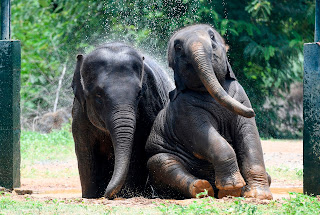
Why elephants never forget

Image
  Advanced lesson plan (B1 and above): Why elephants never forget - BUY ME A COFFEE if you like my FREE ESL content Elephants have famously long memories: they can remember people who have hurt them and helped them many decades after the event.  In this B1/C1 worksheet, students will learn a host of astounding facts about these gentle giants. Also, they will study six elephant-related idioms, read an ancient Indian allegory about the flappy-eared beasts, and more! Educational materials shouldn't be paywalled. Show your support for my ESL content by  buying me a coffee! Lesson activities: 1) To warm up, students will read six pun-ny jokes about elephants, and discuss times they've seen elephants in person or on TV.  2) Students will watch a short video (5:22) from Ted-ED about elephants and their fantastic memories.  Key vocabulary: companions, boast, encephalisation quotient, matriarch, to exact revenge. 3) Next, students will see  six elephant-related...

The boy who was raised as a girl

Image
Advanced lesson plan (B1 and above): The boy who was raised as a girl -  BUY ME A COFFEE if you like my FREE ESL content After a botched circumcision, doctors recommended baby Bruce be raised as a girl. He would be happier as a girl than as a boy without a penis, according to the family's psychologist Dr John Money. His true identity was to be kept a secret. In this worksheet, students will discuss the line between nature and nurture, the patient-doctor relationship and a mother who did her best in an impossible position.  Educational materials shouldn't be paywalled. Show your support for my ESL content by  buying me a coffee! Lesson activities: Part 1: The Accident . Students read the introduction to the medical case study. They must complete the sentences by choosing words from the purple box. There is then a discussion section, where they can practise second and third conditional structures: "If that happened to my son, I would feel devastated"; "If I had bee...

Why humans are exceptional runners

Image
Advanced lesson plan (B2 and above): Why humans are exceptional runners -   BUY ME A COFFEE if you like my FREE ESL content Learn why humans are the best long-distance runners in the world! In this B2/C1 worksheet, students will study a short video revealing the physiology hacks that make humans apex runners. In addition, they will see some running-related idioms, match jokes about running with their punchlines and study an article about how to avoid injuries. Educational materials shouldn't be paywalled. Show your support for my ESL content by  buying me a coffee! Lesson activities: 1) To warm up, students will match six running-related jokes with their punchlines. E.g. Why did the marathon runner end up in jail? ANSWER: Because he was resisting a rest! 2) Students will watch a Tech Insider video (3 minutes 49 seconds) about the unique physiological tricks that make humans awesome at long-distance running.  3) Next, students will see  six running-related idioms/phra...

How do blood transfusions work?

Image
  Flipped lesson plan (B2 and above): How do blood transfusions work? -  BUY ME A COFFEE if you like my FREE ESL content Learn about the life-saving science of blood transfusions! In this B2/C1 worksheet, students will learn about the development of blood transfusion technology, from experiments with sheep blood in the 1600s to the blood banks of WW1. They will also see blood-related idioms, and read a poem written by a Canadian soldier/physician who fought and died in WW1. Educational materials shouldn't be paywalled. Show your support for my ESL content by  buying me a coffee! Lesson activities: 1) To warm up, students will read 'In Flanders Field', a poem written by a Canadian soldier/physician in WW1. They will have to discuss their interpretation, as well as find the definitions of advanced vocabulary: foe, quarrel, poppies, lark, row on row.  2) Students will watch a Ted-Ed video explaining the early beginnings of blood-transfusion technology, from the discover...

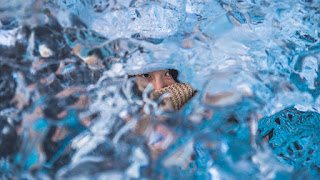
Why is ice slippery?

Image
Flipped lesson plan (B2 and above): Why is ice slippery? -  BUY ME A COFFEE if you like my FREE ESL content Learn why it is so hard to walk on ice without falling over.  In this worksheet, students will watch a video about the science of slipperiness, learn ice-related idioms and read an article about Frederic Tudor, the intrepid American entrepreneur who created a global market for ice in the 1800s. Educational materials shouldn't be paywalled. Show your support for my ESL content by  buying me a coffee! Lesson activities: Discuss one of Robert Frost's most famous poems, 'Fire and Ice' Watch a video explaining the reason for ice's slipperiness, using scientific vocabulary (friction, megapascals, pressure, hydrogen bonds) Learn idioms/phrases related to ice (frosty reception, when hell freezes over, (someone) could sell ice to an Eskimo, to be on thin ice) Study a text from  The Atlantic  about the stubborn American entrepreneur who defied naysayers and made hu...

How police interrogations work

Image
Flipped lesson plan (B2 and above): How do police interrogations work? -  BUY ME A COFFEE if you like my FREE ESL content Learn how cops subtly manipulate suspects to extract a confession. In this worksheet, students will watch a video about the psychological techniques used by police to interrogate suspects. They will also read a case study, involving a woman who murderered her baby step-son. (WARNING: not suitable for young learners.)  Educational materials shouldn't be paywalled. Show your support for my ESL content by  buying me a coffee! Lesson activities: Explain in your own words the interrogation techniques detailed in the video  Read an interrogation transcript and analyse how the psychological techniques have been applied  Learn idioms/phrases related to interrogations (spill the beans, guilt trip, to talk one's way out of something, to grill someone, like talking to a brick wall, spit it out) Match descriptions of guilt, anguish and anger with pictur...

Why do we feel nostalgia?

Image
Advanced ESL worksheet (B2 and above):  W hy do we feel nostalgia? -  BUY ME A COFFEE if you like my FREE ESL content In this worksheet, students will read a poem about nostalgia and reflect on their own childhoods and how they feel looking back on them today. Idioms for discussing the past will be introduced (look through rose-tinted glasses, for old time's sake, a blast from the past, salad days). They will watch a Ted-Ed video about how nostalgia was once considered to be a dangerous mental health problem. The worksheet concludes with an article by behavioural economist Ben Ho on how Hollywood exploits our feelings of nostalgia to sell us reboots of the same old stories (think: Jurassic Park, Marvel films, etc.) Educational materials shouldn't be paywalled. Show your support for my ESL content by  buying me a coffee! Lesson outcomes:  Analyse poetic language in 'The Land of Lost Content' by Alfred Edward Housman (e.g. blue remembered hills, happy highways) Study...

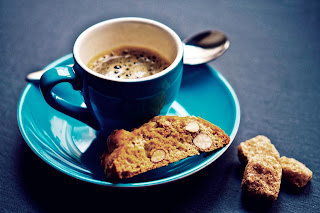
How coffee keeps us awake

Image
Flipped lesson plan: How coffee keeps us awake -    BUY ME A COFFEE if you like my FREE ESL content This advanced (B2 and above) worksheet is about the world's favourite drug: caffeine! It explores how caffeine affects our nervous system, based on a TED-Ed video. In addition, students will learn idioms and phrasal verbs related to sleep, and study the history of coffee in the ancient world and in 1940s Italy. Educational materials shouldn't be paywalled. Show your support for my ESL content by  buying me a coffee! Lesson outcomes:  Learn idioms and phrasal verbs related to sleep and see them in context (e.g. lie in, hit the hay, burn the candle at both ends) Watch and discuss a Ted-Ed video on the effect of caffeine on the nervous system, using specialised biological vocabulary (e.g. neurons, neurotransmitters, adenosine, dopamine) Study five attempts to ban coffee, spanning from Mecca in 1511 to Prussia in 1777 (advanced vocabulary: paraphernalia, clergymen, co...

How labour leads to love

Image
Flipped lesson plan: How labour leads to love -  BUY ME A COFFEE if you like my FREE ESL content This worksheet is for B2 and above students. It is about the 'Ikea Effect', an observation in behavioural economics that consumers value products more when they have invested time into their assembly. Think: Build-a-Bear, homemade food, Ikea furniture. I recommend students watch the video in exercise two before the class.  Educational materials shouldn't be paywalled. Show your support for my ESL content by  buying me a coffee! Lesson outcomes:  Follow instructions to make an origami swan, as a prelude to Dan Ariely's famous study on how people value their own cranes compared with those made by other people Understand academic-level English from behavioural economist Dan Ariely on the concept of the 'Ikea Effect', and reflect on how it is applied in one's personal life and in business Learn tool-related idioms (hit the nail on the head, hammer home, a spanner in...